
A learner permit, a safe driving course certificate, enough supervised practice, a qualified accompanying driver, and a vehicle that meets the DMV’s rules. The Albany Driving Test Route starts from a road test site on North 2nd Street, facing Broadway, ZIP 12204. The DMV says to stop in line at the sign that reads “Car/ Motorcycle Test Starts Here.” This guide covers what you need before booking, what to bring on test day, and what happens after.


What Learners Need
What do learners need for the Albany Driving Test Route?
Six things, according to the DMV’s pages:
- A learner permit
- An approved safe driving course certificate (MV-278), or a student certificate (MV-285) on file
- Supervised practice. The manual says it’s important to have at least 50 hours, with at least 15 after sunset.
- An accompanying driver with a physical license valid for your test vehicle
- A vehicle with valid registration, insurance, and inspection
- A booked road test appointment
The sections below explain each one.
Do learners need a safe driving course first?
Yes. The manual says you must finish an approved safe driving course before you can make a road test appointment. A 5-hour Pre-Licensing Course gives you a certificate (MV-278). A high school or college driver education course gives you a student certificate (MV-285). The MV-278 is valid for one year, so don’t finish the course too early. The DMV’s Point and Insurance Reduction Program does not count. Adults 18 and over can also use a pilot online Pre-Licensing Course. See the NY State Driver’s Manual for the full rules.
How much practice do learners need?
The manual says it’s important to have at least 50 hours, with at least 15 after sunset. It recommends at least 10 of those hours in moderate to heavy traffic. Road tests use city streets, but practice on expressways and other highways too. The manual also suggests a driver education course or lessons from a DMV-licensed driving school. Watch the DMV’s “Preparing for a Class D (Passenger Vehicle) Road Test” video. The road test page links to it. The DMV does not allow practice driving at its road test sites.
Who can supervise learners while they practice?
Your supervising driver must be at least 21, hold a license valid for your vehicle, and sit in the front seat. The manual adds that in Long Island and New York City, this person must be a parent, guardian, or driving instructor. That extra rule names only those two regions, and Albany is upstate. If you’re under 18, the manual adds rules for night driving. From 9 p.m. to 5 a.m., upstate junior permit holders need a parent, guardian, person in loco parentis, driver education teacher, or driving school instructor.
What should I bring to my Albany Driving Test Route appointment?
The DMV’s road test page lists what you need. The main items:
- Your physical photo learner permit (the DMV does not accept Mobile ID)
- Your glasses or contacts, if your permit says you need them
- Your original Pre-Licensing Course Certificate (MV-278), because copies don’t count
- A completed Certification of Supervised Driving (MV-262), if you’re under 18
- A supervising driver with a physical license valid for your test vehicle: over 21 if you drive to the site, over 18 if a licensed driver drives you there
- A vehicle in clean condition and running properly, with valid registration, insurance, and inspection
Only your accompanying driver can ride along. You can’t bring other passengers. The vehicle also needs permanent license plates, and in-transit permits don’t work. The manual says the vehicle needs working doors and seat belts. The examiner needs a clean passenger-side seat belt. Check the NY DMV road test page for the full, current list.
Getting to the Test
How do I get to the Albany Driving Test Route site?
The DMV’s page for the site gives directions. Take I-90 to I-787 North to Exit 6 (Menands). At the end of the ramp, turn left onto Broadway. Stay on Broadway for about eight-tenths of a mile, then turn right onto Lawn Avenue. At the next traffic light, turn left onto North Pearl Street. Go two blocks and turn left onto North 2nd Street. Just before the next traffic light, pull over to the right and stop in line at the “Car/ Motorcycle Test Starts here” sign. Check a current map before you go. See the DMV page for the Albany auto site for the latest directions.
What can I expect from Albany Driving Test Route on test day?
Albany is a road test site, not a DMV office with a service counter. The DMV lists it as “Albany – Auto.” You meet your examiner at the site, then drive on nearby roads. The NY State Driver’s Manual says examiners give road tests on city streets. Arrive up to 15 minutes before your test time. If you arrive late, the examiner may not be able to test you, and you will have to reschedule. Before the test, the examiner takes pictures of you, your documents, your permit, and your vehicle. The NY DMV doesn’t publish exact routes for its road test sites, Albany included. Check for cancellations before you leave home. The DMV can cancel or relocate tests because of weather or road construction. Not every test site has a shelter, so plan for the weather.
How do learners book a road test at Albany Driving Test Route?
Book online or by phone at 1-518-402-2100. You need your learner permit and the ZIP code where you’d like to test. You also need your MV-278 certificate or your MV-285 on file, and at least one unused road test. The DMV’s general statement says the earliest date is usually 3 to 5 weeks away, and up to 10 weeks at peak times. There are no waiting lists. These are statewide figures, not Albany numbers. You can book a site in any county. If you’re under 18, you must wait at least six months from the date you got your learner permit.
What happens after the test?
The examiner gives you instructions for checking your results online. The DMV posts them after 6 p.m. on test day. If you pass, you can get an interim license online. Your photo license arrives by mail in about two weeks. If you’re under 18, you receive a junior license (Class DJ), and the manual’s junior license rules apply. If you fail, your learner permit stays valid until it expires. You can book another road test after waiting at least 14 days. You pay additional fees if you failed your first two road tests.
Preparing and Staying Calm
Are there specific roads I should focus on for the Albany Driving Test Route?
Nobody can guarantee which streets you’ll get. Treat any source that claims otherwise with caution, since the DMV doesn’t publish exact routes. Based on instructor input and route pattern data, Albany tests reasonably draw from roads around North 2nd Street, Broadway, and North Pearl Street. Steady, consistent driving matters more than guessing the route in advance.
What are the most common mistakes test-takers make on the Albany Driving Test Route?
Showing up without the right paperwork, vehicle, or accompanying driver is the most avoidable one. Other frequent issues on the road include:
- Forgetting to check mirrors before pulling away from the curb
- Rolling through stop signs at intersections
- Misjudging speed on busier roads
- Missing cyclists and pedestrians when turning
- Making wide or poorly positioned turns
Most of these mistakes come from nerves, not a lack of skill. They improve fast with steady practice.
I get nervous before driving tests. How can I calm down before my Albany appointment?
Plan your trip ahead of time so you arrive calm. Arrive within the window the DMV allows, up to 15 minutes early. Sit in the car for a minute. Run through your mirrors, seat position, and controls. The same warm-up before every practice drive can carry that calm into the test.
What do examiners look for during the Albany Driving Test Route?
The DMV pages reviewed for this article don’t list a scoring checklist for the standard road test. The road test page does link to a preparation video, so watch it. In general, examiners want steady, predictable, safe driving, not a flawless run. They’re checking whether you drive like a licensed, independent driver would.
Is there a published pass rate for the Albany site?
The DMV pages reviewed don’t list pass rates by site. Treat any percentage quoted for Albany with caution. The same goes for claims that one site is easier than another. Those claims come from commercial driving schools, not DMV data. Steady practice and the right paperwork will help more.
How RouteBuddy Can Help You Prepare
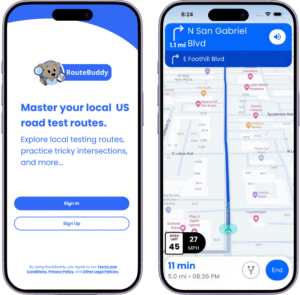
Once your checklist is complete, the roads around the site matter. RouteBuddy helps you practice the roads commonly used around your test center before test day. It draws on driving instructor input and route pattern data, not NY DMV records.
Here’s what the app offers:
- Turn-by-turn voice navigation, so you can focus on driving instead of directions
- Mock exam simulation for a realistic run-through before the real thing
- Map previews of the roads near your test center
- Practice for tricky junctions and intersections, the spots learners tend to struggle with
- Apple CarPlay and Android Auto support, so it works right through your car’s display
RouteBuddy is subscription-based. It’s available on the Apple App Store and Google Play Store. It won’t ever claim to show you the official or guaranteed route for Albany, because that doesn’t exist. What it gives you instead is a practical way to practice the roads and junctions your examiner is likely to use.
Final Thoughts
So what do learners need for the Albany Driving Test Route? A permit, a safe driving course certificate, steady supervised practice, a qualified accompanying driver, and a vehicle that meets the DMV’s rules. Then go to North 2nd Street and look for the sign marking the start of the line. Nobody can hand you the exact route, but steady practice puts you well ahead of guessing blind.